


- SPEECH
Hearing at the Committee on Economic and Monetary Affairs of the European Parliament
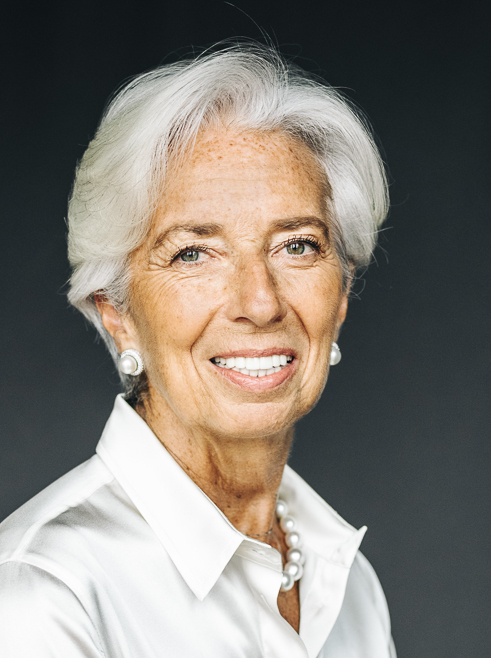
Speech by Christine Lagarde, Chair of the European Systemic Risk Board, at the Hearing at the Committee on Economic and Monetary Affairs of the European Parliament
Brussels, 3 December 2025
It is a pleasure to address you today in my capacity as Chair of the European Systemic Risk Board (ESRB). When I appeared before this Committee a year ago, I expressed concern that the financial stability perspective seemed to be fading from public debate. This is why I want to commend the Committee for bringing it back into focus through your excellent own-initiative report on safeguarding and promoting financial stability. Your conclusions strongly accord with many of the ESRB’s priorities as well as our risk assessment and I look forward to discussing these topics with you today.
Let me start with some key areas addressed in your report.
First, you stress the importance of a system-wide approach to macroprudential policy. This is central to the ESRB’s work[1]: risks do not stop at borders, nor are they limited to one type of financial entity or activity. We must look at the whole financial system, not just the individual parts. Consequently, one of the ESRB’s priorities is to advance the development of a top-down system-wide stress test. This also aligns closely with the insights from your report.
Second, you stress the need to close regulatory gaps, in particular for non-bank financial intermediaries, such as money market funds. You also emphasise the importance of addressing regulatory shortcomings in the context of crypto-assets, such as stablecoins. The ESRB has consistently advocated addressing these regulatory gaps to enhance financial stability.
I would also like to make a link between two critical points you make in your report.
You call for a cautious approach to simplifying post-2008 reforms: streamlining only when there are clear, substantiated benefits to the real economy and without jeopardising financial stability.
You also highlight the necessity for authorities – at both national and EU level – to have access to high-quality, comprehensive data.
There are certainly ways to simplify the reporting frameworks in the EU. In fact, the ESRB has made some concrete proposals in this regard[2], such as investing in new technologies and standardisation. But we cannot compromise the integrity and comprehensiveness of data – to do so would reintroduce opacity and impair our ability to monitor risks to financial stability. I hope your Committee will support us in maintaining this critical balance.
Let me now update you on the conclusions of our recent risk assessment. Two weeks ago the General Board of the ESRB held its regular meeting to discuss vulnerabilities and risks to the EU’s financial system. But first, I want to stress an important distinction: financial stability is about what could happen, not what is likely to happen. Our discussions – and my statement today – focus on scenarios at the tail end of the probability distribution, not central forecasts.
The General Board highlighted that the economy had been resilient to sizeable shocks, but challenges remain. Adverse macroeconomic or trade-related shocks could put significant stress on firms and households across the EU. The global trade environment continues to be volatile, and this could disrupt supply chains, dampen exports, and weigh on consumption and investment. And of course, geopolitical tensions remain a major source of uncertainty. Russia’s unjustified war against Ukraine is particularly concerning, as it continues to cast a long shadow over the global economy.
The General Board expressed concern with growing vulnerabilities in financial markets. If macroeconomic or geopolitical shocks were to materialise, they could trigger a disorderly market correction. At present, valuations of several riskier asset classes appear stretched, and there is a notable concentration in certain market segments, for instance US technology. This elevated risk appetite in global financial markets does not seem to align with the subdued economic outlook in major economies and the prevailing uncertainties we face, including on future productivity improvements from technology investment. Vulnerabilities within the non-bank financial sector, such as liquidity mismatches of open-ended investment funds, pockets of high leverage among hedge funds and opacity in private markets could all exacerbate adverse market dynamics.
At the same time, the General Board acknowledged the continued resilience of the EU’s financial system as demonstrated by recent EU-wide stress tests, for which the ESRB provides adverse scenarios.[3] The most recent results of the ECB’s Supervisory Review and Evaluation Process also confirm high capital and liquidity buffers in the banking sector. However, there are limited signs of worsening credit risk, and the impact of tariffs on businesses in the EU may take some time to trickle through bank balance sheets. Insurers remain sound although the General Board is concerned about recent changes to Solvency II which resulted in less prudent regulatory requirements.
- In conclusion, keeping financial stability firmly embedded in the policy narrative is essential as we navigate an increasingly complex environment. By adopting a system-wide perspective, addressing regulatory gaps and ensuring access to high-quality data, we can respond effectively to emerging risks.
- Thank you, and I look forward to your questions and insights.
ESRB (2024), A system-wide approach to macroprudential policy – ESRB response to the European Commission’s consultation assessing the adequacy of macroprudential policies for non-bank financial intermediation, November.
ESRB (2015), ESRB response to ESMA's Call for evidence on a comprehensive approach for the simplification of financial transaction reporting, 19 September.
See the results of EBA 2025 banking sector stress test, EIOPA 2024 insurance stress test, ESMA 2024 central counterparties stress test.
Europese Centrale Bank
Directoraat-generaal Communicatie
- Sonnemannstrasse 20
- 60314 Frankfurt am Main, Duitsland
- +49 69 1344 7455
- media@ecb.europa.eu
Reproductie is alleen toegestaan met bronvermelding.
Contactpersonen voor de media